


As a supplier of passive wall speakers, I often encounter questions from customers regarding the performance of these speakers, especially when it comes to high - volume operation. One of the most frequently asked questions is: "Do passive wall speakers distort at high volume?" In this blog post, I'll delve into the science behind speaker distortion, the factors that contribute to it in passive wall speakers, and how to mitigate these issues.
Understanding Speaker Distortion
Before we can answer whether passive wall speakers distort at high volume, we need to understand what distortion is. In the context of speakers, distortion refers to any change in the audio signal as it passes through the speaker system that results in a difference between the original input signal and the output sound. This can manifest in various forms, such as harmonic distortion, inter - modulation distortion, and transient distortion.
Harmonic distortion occurs when additional frequencies (harmonics) are introduced to the original signal. These harmonics are integer multiples of the fundamental frequency of the original signal. For example, if the original signal has a frequency of 100 Hz, harmonic distortion might introduce frequencies at 200 Hz, 300 Hz, and so on. Inter - modulation distortion, on the other hand, happens when two or more frequencies interact with each other in the speaker, creating new frequencies that were not present in the original signal. Transient distortion is related to the speaker's ability to accurately reproduce sudden changes in the audio signal, such as the attack of a drum or a cymbal crash.
Factors Contributing to Distortion in Passive Wall Speakers at High Volume
1. Power Handling Limitations
Passive wall speakers have a specific power - handling capacity, which is usually measured in watts. This rating indicates the maximum amount of power the speaker can handle without being damaged or distorting the sound significantly. When you play music at high volume, you are essentially sending more power to the speaker. If the power exceeds the speaker's rated power handling capacity, the speaker will start to distort.
For example, if a passive wall speaker has a power - handling rating of 50 watts and you connect it to an amplifier that is delivering 100 watts of power, the speaker will likely experience distortion. The excess power can cause the speaker's voice coil to overheat, which can lead to changes in its electrical resistance and mechanical properties. As a result, the speaker may not be able to move the air accurately to reproduce the original audio signal, leading to distortion.
2. Mechanical Limitations
The physical construction of passive wall speakers also plays a role in their performance at high volume. The diaphragm (usually a cone or a dome) of the speaker is responsible for moving air to create sound. At high volume, the diaphragm has to move more vigorously. However, it has a limited range of motion. If the diaphragm is pushed beyond its mechanical limits, it can cause distortion.
For instance, if the diaphragm is forced to move too far, it may hit the frame of the speaker or other internal components. This can result in a sudden change in the movement of the diaphragm, which will distort the sound. Additionally, the suspension system that holds the diaphragm in place can also become stressed at high volume, leading to non - linear movement of the diaphragm and distortion.
3. Enclosure Design
The enclosure of a passive wall speaker is designed to control the movement of air around the diaphragm and to enhance the speaker's bass response. However, at high volume, the air inside the enclosure can become turbulent, which can affect the performance of the speaker.
A poorly designed enclosure may not be able to dissipate the heat generated by the speaker's voice coil effectively. This can lead to an increase in the temperature inside the enclosure, which can cause the air to expand and contract in an unpredictable manner. As a result, the speaker may experience distortion, especially in the bass frequencies.
Mitigating Distortion in Passive Wall Speakers
1. Match the Amplifier to the Speaker
To avoid power - related distortion, it's crucial to match the power output of the amplifier to the power - handling capacity of the passive wall speaker. You should choose an amplifier that can deliver power within the speaker's rated range. This will ensure that the speaker receives the right amount of power to reproduce the audio signal accurately without being overloaded.
2. Choose High - Quality Speakers
Investing in high - quality passive wall speakers can significantly reduce the risk of distortion at high volume. High - quality speakers are usually built with better materials and more precise manufacturing processes. They have higher power - handling capacities, better mechanical designs, and more efficient enclosure designs.
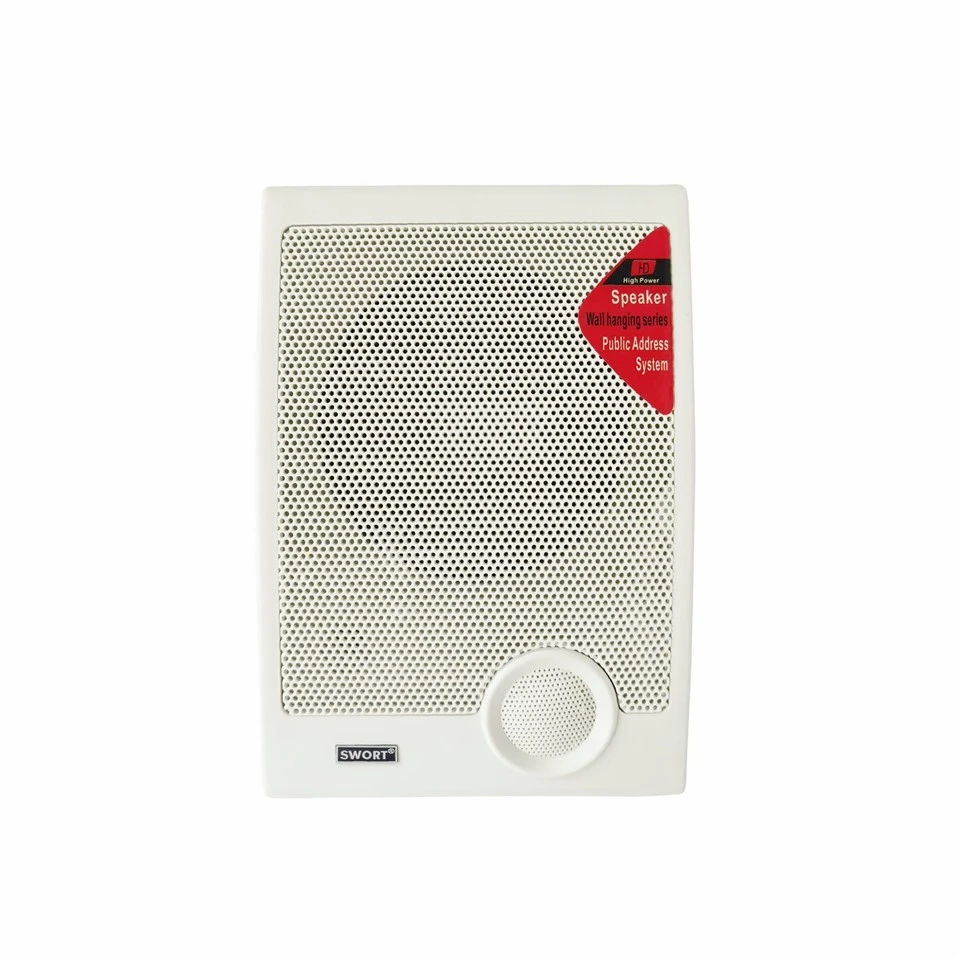
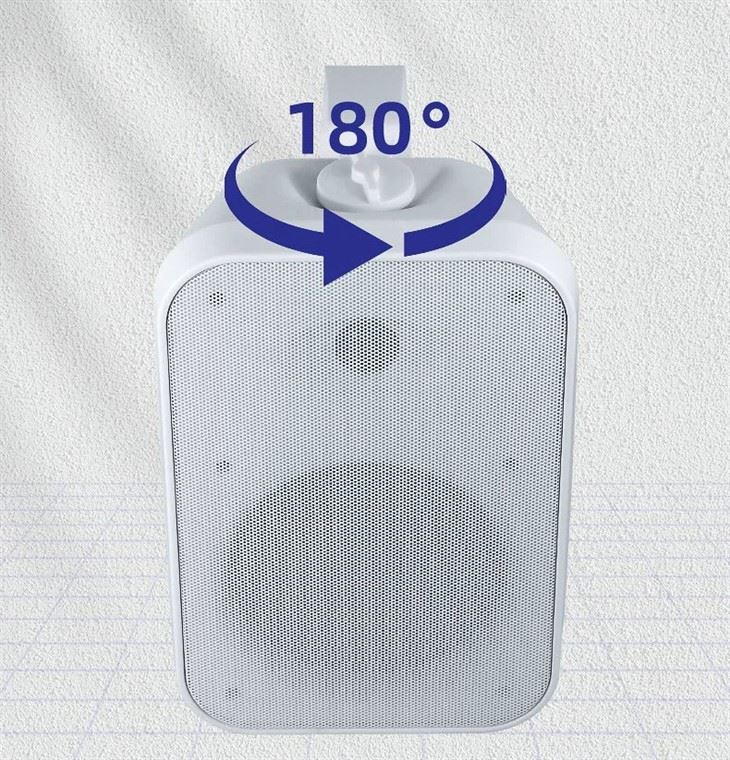
For example, you can explore our Wall Hanging Speakers and Small in Wall Speakers, which are designed to provide excellent sound quality even at high volume. Our Waterproof In - wall Speaker is also a great option for outdoor or high - humidity environments, with features that help minimize distortion.
3. Proper Installation
Proper installation of passive wall speakers is essential for optimal performance. Make sure the speakers are installed in a location where they have enough space to breathe and where the air can circulate freely around them. Avoid installing the speakers in a cramped space or near heat sources, as this can affect their performance at high volume.
Conclusion
In conclusion, passive wall speakers can distort at high volume due to power - handling limitations, mechanical limitations, and enclosure design. However, by understanding these factors and taking appropriate measures, such as matching the amplifier to the speaker, choosing high - quality speakers, and ensuring proper installation, you can minimize the risk of distortion and enjoy high - quality sound at high volume.
If you're interested in purchasing high - quality passive wall speakers for your home or commercial space, I encourage you to contact us for a detailed discussion. We can help you select the right speakers based on your specific needs and budget. Whether you're looking for wall - hanging speakers, small in - wall speakers, or waterproof in - wall speakers, we have a wide range of products to meet your requirements. Let's start a conversation about how we can enhance your audio experience with our passive wall speakers.
References
- Toole, Floyd E. "Sound Reproduction: The Acoustics and Psychoacoustics of Loudspeakers and Rooms." Focal Press, 2019.
- Beranek, Leo L. "Acoustics." American Institute of Physics, 1993.


