


Why choose us?
Since 2006, Swallow Electronics has been a trusted source for Public Address System Speaker.
We manufacture and export Ceiling Speakers, Wall Speakers, Ball Speakers, Garden Speakers, Horn Speakers, Column Speakers, Megaphones and related audio products.
Professional Team
19 years of production experience, 13 years of export expertise, and a skilled team with 15+ years in speaker manufacturing.
Quality Control
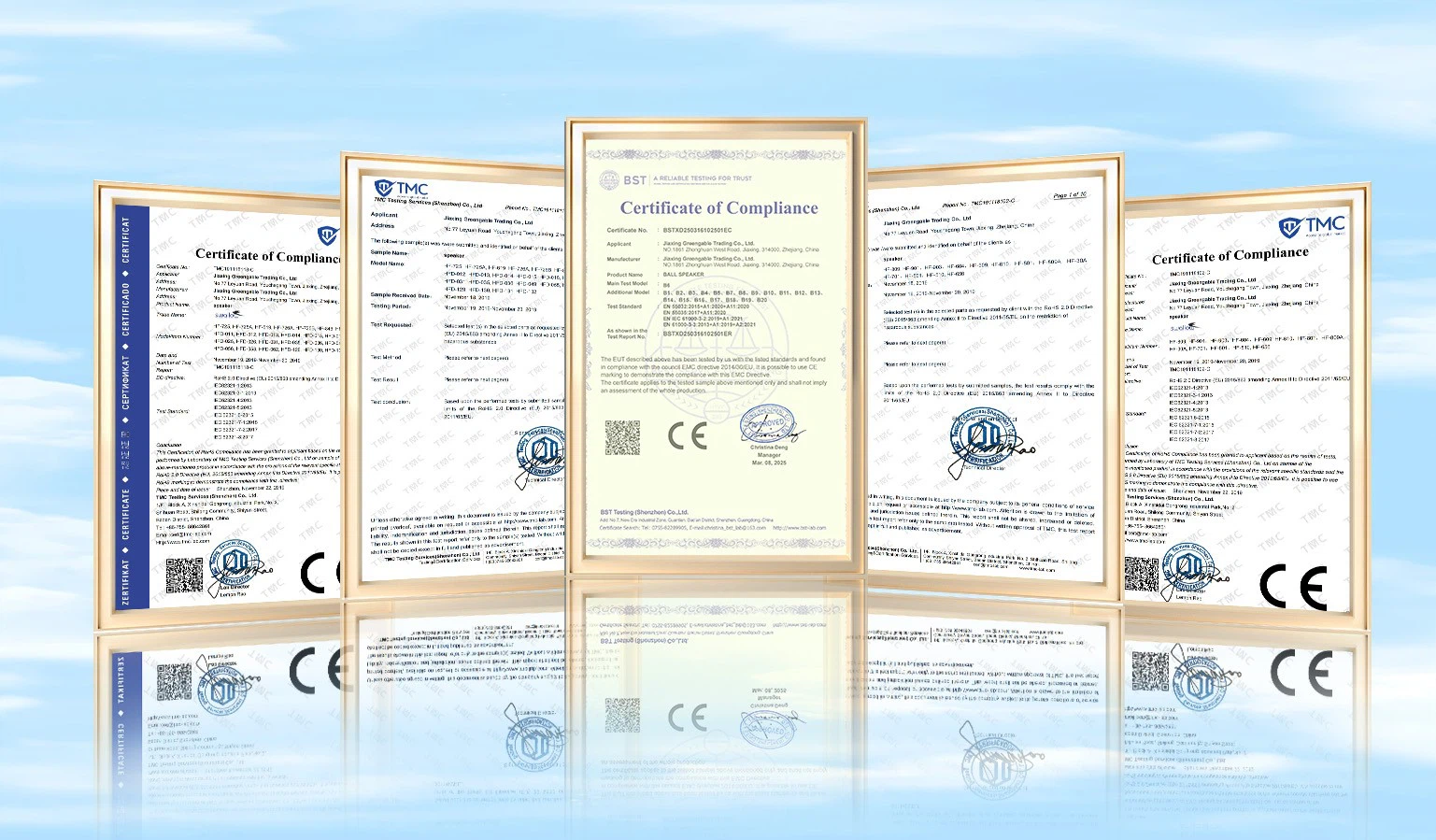
Strict quality control, professional quality inspection and testing equipment; all products are CE & RoHS certified.
Fast Response
Professional technicians and service teams are online 24 hours a day, and respond quickly within 5 minutes.
Customized Service
Accept ODM/OEM service, 24-hour tailored solutions, fast prototyping, and quick delivery.
-
![100W Long Range Horn Speaker]() 100W Long Range Horn Speaker100V/8Ω Outdoor PA Horn Speaker. Model:H9. Short Description:. Rated power: 100W. Input Voltage: 100V / 8Ω (switchable). Speaker Driver: 5 woofer + tweeter .
100W Long Range Horn Speaker100V/8Ω Outdoor PA Horn Speaker. Model:H9. Short Description:. Rated power: 100W. Input Voltage: 100V / 8Ω (switchable). Speaker Driver: 5 woofer + tweeter . -
![Directiona Horn Speaker]() Directiona Horn Speaker50W Waterproof Long-Range Directional Horn Speaker for Parking Lots. Model:H7. Short Description:. Rated power:50W. Input Voltage:70V / 100V. Speaker Driver: 5.5 woofer + 2 × 3tweeter .
Directiona Horn Speaker50W Waterproof Long-Range Directional Horn Speaker for Parking Lots. Model:H7. Short Description:. Rated power:50W. Input Voltage:70V / 100V. Speaker Driver: 5.5 woofer + 2 × 3tweeter . -
![Horn Speaker 50 Watt]() Horn Speaker 50 WattModel: H5. Rated power: 50W. Input voltage: 70/100V. Frequency range: 200-20KHz. SPL(@1W/m): 97dB.
Horn Speaker 50 WattModel: H5. Rated power: 50W. Input voltage: 70/100V. Frequency range: 200-20KHz. SPL(@1W/m): 97dB. -
![Engineering Horn Speaker]() Engineering Horn Speaker30W Horn Speaker for Public Address and Outdoor Installations. Model:H8. Short Description:. Rated power:30W. Input Voltage:70V / 100V. Speaker Driver: 5.5 full range .
Engineering Horn Speaker30W Horn Speaker for Public Address and Outdoor Installations. Model:H8. Short Description:. Rated power:30W. Input Voltage:70V / 100V. Speaker Driver: 5.5 full range . -
![Horn Speaker PA System]() Horn Speaker PA SystemModel: H1. Rated power: 10W/30W. Input voltage: 70/100V. Frequency range: 350-8KHz. SPL(@1W/m): 107dB.
Horn Speaker PA SystemModel: H1. Rated power: 10W/30W. Input voltage: 70/100V. Frequency range: 350-8KHz. SPL(@1W/m): 107dB. -
![Outdoor Pa Horn Speaker]() Outdoor Pa Horn SpeakerModel: H2. Rated power: 30W/60W. Input voltage: 70/100V. Frequency range: 200-7KHz. SPL(@1W/m): 108dB.
Outdoor Pa Horn SpeakerModel: H2. Rated power: 30W/60W. Input voltage: 70/100V. Frequency range: 200-7KHz. SPL(@1W/m): 108dB. -
![70V Horn Loudspeaker]() 70V Horn LoudspeakerModel: H3. Rated power: 30W. Input voltage: 70/100V. Frequency range: 400-5KHz. SPL(@1W/m): 103dB.
70V Horn LoudspeakerModel: H3. Rated power: 30W. Input voltage: 70/100V. Frequency range: 400-5KHz. SPL(@1W/m): 103dB. -
![White Weatherproof PA Horn]() White Weatherproof PA HornModel: H4. Rated power: 50W. Input voltage: 70/100V. Frequency range: 400-5KHz. SPL(@1W/m): 105dB.
White Weatherproof PA HornModel: H4. Rated power: 50W. Input voltage: 70/100V. Frequency range: 400-5KHz. SPL(@1W/m): 105dB. -
![Long Distance Horn Loudspeaker]() Long Distance Horn LoudspeakerModel: H6. Rated power: 180W-500W. Input voltage: 70/100V. Frequency range: 70-18KHz. SPL(@1W/m): 96dB-103dB.
Long Distance Horn LoudspeakerModel: H6. Rated power: 180W-500W. Input voltage: 70/100V. Frequency range: 70-18KHz. SPL(@1W/m): 96dB-103dB.


What are Horn Speakers?
A speaker horn, as the name suggests, is a component of audio equipment shaped like a horn, usually connected to the driver unit of a speaker. Its function is to enhance the efficiency of sound propagation by changing the way the sound travels so that the sound can cover a longer distance and reduce distortion while maintaining high sound quality.
A loudspeaker horn is generally composed of two parts: the horn body and the driver unit:
- Horn body
horn-shaped, usually made of plastic, metal, wood, and other materials. The shape and size of the horn varies according to the desired audio frequency and application scenario.
- Driver unit
A loudspeaker unit connected to the horn and responsible for generating sound. The sound is transmitted through the drive unit into the horn, which is then extended and directed through the horn structure.
The loudspeaker horn helps the sound travel better. It makes the sound louder and clearer, especially in big places like stadiums and concerts. The horn helps focus the sound so it can go farther. It also reduces noise and echoes, which makes the sound clearer, especially the high-pitched sounds. Plus, the special bass horn makes the low sounds stronger, giving more powerful bass.
▂▂▂▂▂▂▂▂▂▂▂▂▂▂▂▂▂▂▂▂▂▂▂▂▂▂▂▂▂▂
Benefits and Applications of Horn Speakers
Horn loudspeakers, a pivotal element in the realm of audio installations, stand out for their unique design and functionality, distinguishing themselves from conventional loudspeaker systems. The essence of horn speakers lies in their ability to project sound over long distances with remarkable clarity and efficiency. This is achieved through an acoustic horn added to the driver, which significantly improves the speaker's overall efficiency by matching the impedance of the driver to the air. This technical advantage allows horn loudspeakers to produce louder sound from the same amount of input power compared to other types of speakers.
The significance of horn-style speakers is especially pronounced in various commercial settings where clear, audible sound distribution is crucial. These settings include large venues like stadiums and concert halls, public spaces such as airports and train stations, and even outdoor areas where environmental factors can affect sound propagation. The efficiency of horn loudspeakers in converting electrical energy into sound energy makes them a preferred choice for applications requiring high sound levels without the need for excessive amplification power. This not only ensures that announcements, music, or any audio content is heard clearly by the intended audience but also contributes to the longevity and reliability of the audio system by reducing strain on the components.
Moreover, the directional nature of horn loudspeakers allows for precise control over the sound's dispersion, ensuring that audio is directed exactly where it is needed. This characteristic is invaluable in commercial settings, where managing sound spillage and ensuring audio clarity in specific zones are critical considerations. Whether integrating into a comprehensive public address system or providing focused audio solutions for specific areas, horn speakers embody a versatile and efficient option for various commercial installations.
How Horn Speakers Work
At their core, horn speakers work by coupling a driver (usually a compression driver) to a horn-shaped structure that progressively increases in cross-sectional area. This process provides a smooth transition of acoustic energy from the driver to the air, which increases efficiency and directs sound more precisely.
The Horn Principle Explained
A horn speaker functions as an acoustic impedance-matching device. In layman’s terms, it efficiently transfers energy from the driver to the air. Without a horn, a typical speaker driver struggles to move air efficiently, resulting in low sound pressure levels. The horn provides a gradual expansion that helps “match” the high acoustic impedance of the driver with the lower impedance of the open air, resulting in greater sound output.
Because the horn structure amplifies the sound produced by the driver, horn speakers are much more efficient than traditional direct-radiating speakers. This means they can produce the same volume level with significantly less power.
▂▂▂▂▂▂▂▂▂▂▂▂▂▂▂▂▂▂▂▂▂▂▂▂▂▂▂▂▂▂
Types of Horn Speakers:
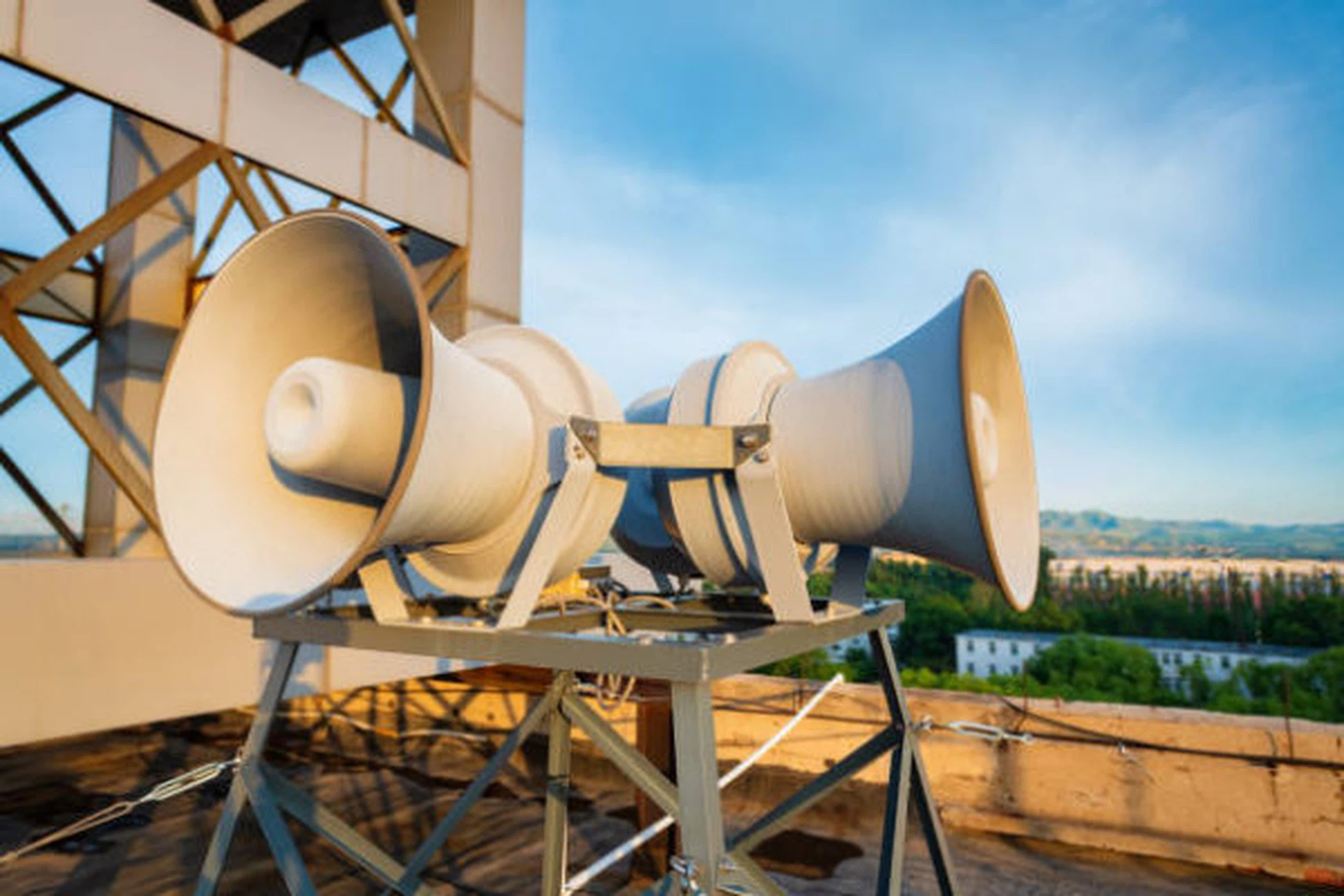
Elliptical Horn
The Elliptical Horn is designed in the shape of an ellipse for applications that require special control over the angle of sound extension.
Pros:
♦ Provides more directional sound propagation and can avoid unwanted sound scattering.
♦ Commonly used in medium to high frequency applications to ensure clear sound focus.
Cons:
♦ Not suitable for low-frequency sound extension; low-frequency response may be weak.
♦ More complex to design and manufacture.
Applicable:
♦ Suitable for places that require precise control of sound direction, such as theaters, conference centers and high-end sound systems.
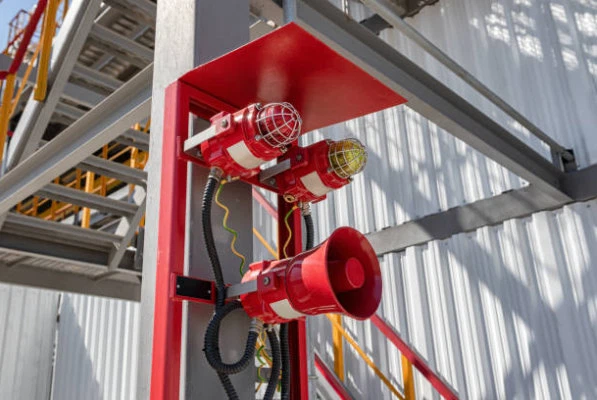
Conical Horn
The Conical Horn is the most common type and has an even extension angle. Its design is similar to a conical shape, with audio conducted from a narrow port to a wide port.
Pros:
♦ Simple and easy to manufacture, relatively low cost.
♦ Provides good dispersion for midrange and high frequency sounds.
♦ Commonly used in small to medium sized sound systems.
Cons:
♦ Limited range of extension, suitable for venues where great coverage is not required.
♦ May not be as good as other types of horns in low frequency response.
Applicable:
♦ Suitable for home theaters, small public address and medium-sized performance venues.
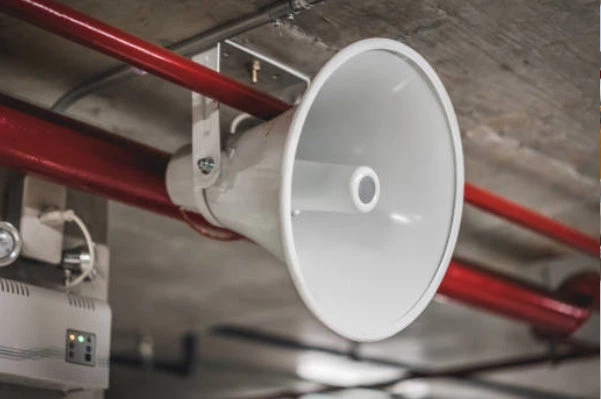
Tractrix Horn
The Tractrix Horn has a progressive curve and is more complex in design than the Conical Horn. Its extended curve helps improve the efficiency of sound wave propagation and reduces distortion.
Pros:
♦ Provides smoother sound dispersion and reduces distortion, especially for high-frequency sounds.
♦ Improves low-frequency response, resulting in a clearer, more precise sound.
Cons:
♦ More complex design and higher manufacturing costs.
♦ Better suited for high-frequency sound, low-frequency response may be limited.
Applicable:
♦ Suitable for high-end audio systems, such as hi-fi, theater and concerts.
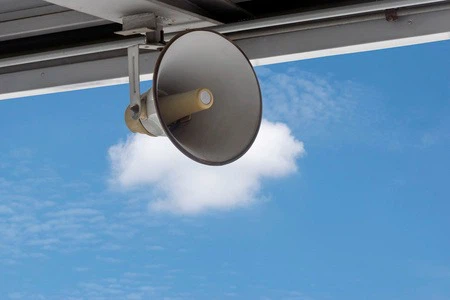
Rectangular Horn
Rectangular horns are rectangular in shape and usually have a wider extension angle. This type of horn is used where there is a need to control the range of sound propagation.
Pros:
♦ Wider extended range, covering more area.
♦ More balanced sound quality, suitable for low and medium frequency sound propagation.
♦ Highly efficient and suitable for large sound systems.
Cons:
♦ Relatively complex structure, requires more space for installation.
♦ May cause distortion in some frequency bands, especially in the high frequency part.
Applicable:
♦ Suitable for large venues, such as stadiums, large concerts, conference rooms.
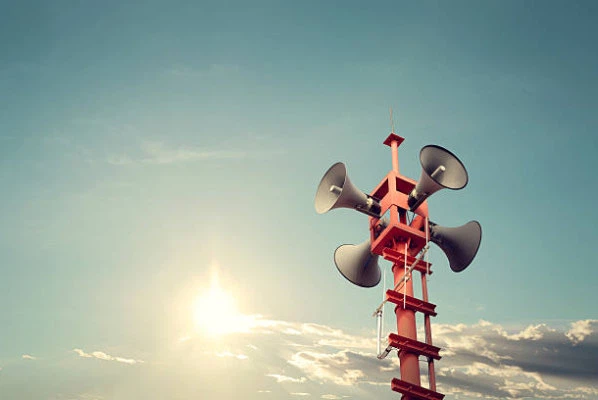
▂▂▂▂▂▂▂▂▂▂▂▂▂▂▂▂▂▂▂▂▂▂▂▂▂▂▂▂▂▂
The Importance Of IP Horn Speakers
IP horn speakers represent a significant advancement in the field of audio technology, combining the traditional advantages of horn loudspeakers with modern, weatherproof designs. These speakers are engineered to withstand the elements, making them ideally suited for outdoor installations where exposure to weather is a concern. IP (Ingress Protection) ratings indicate the level of protection against both solids and liquids, ensuring that these speakers deliver reliable performance in varying environmental conditions. This resilience makes IP horn speakers a versatile and durable choice for a wide array of applications.
The benefits of IP horn speakers extend well beyond their weatherproof capabilities. In the realm of modern communication and entertainment, these speakers play a pivotal role due to their robust design and operational efficiency. They facilitate clear and reliable audio communication in outdoor settings, including parks, sports fields, and outdoor entertainment venues, where traditional speakers might falter due to weather-related damage. This ensures that messages, announcements, and music can be delivered without interruption, enhancing the experience for attendees and participants alike.
Moreover, the integration of IP horn speakers into modern communication systems underscores their importance in ensuring public safety and information dissemination. These speakers can be deployed as part of emergency warning systems in cities, coastal areas prone to natural disasters, and industrial sites requiring robust communication channels that remain operational regardless of weather conditions. The clarity and directionality of sound provided by horn speakers, combined with their weatherproof construction, make them indispensable in scenarios where failure is not an option.
In the entertainment sector, IP horn speakers enable event organisers to extend their reach to outdoor environments without compromising sound quality or equipment longevity. Whether for concerts, outdoor cinemas, or public festivals, these speakers ensure that audiences enjoy a high-quality audio experience, undiminished by the challenges posed by outdoor settings.
▂▂▂▂▂▂▂▂▂▂▂▂▂▂▂▂▂▂▂▂▂▂▂▂▂▂▂▂▂▂
Choosing the Best Horn Speakers
Size: The size of the horn speaker will determine the volume and frequency range of the sound. Choose a size that is appropriate for the size of the venue and the intended audience.
Power handling: The power handling of the horn speaker will determine how much power it can handle without being damaged. Choose a speaker with a power handling rating that is appropriate for your needs.
Frequency response: The frequency response of the horn speaker will determine the range of frequencies it can produce. Choose a speaker with a frequency response that is appropriate for the type of music or speech you will be amplifying.
Weather resistance: If you plan to use the horn speaker outdoors, choose a speaker that is designed to be weather-resistant and durable.
How to cooperate with us ?
If customers want to cooperate with Swallow Electronics Factory, they can follow these steps:
Inquiry & Product Selection
Customers can visit www.loudspeakerchina.com or contact info@loudspeakerchina.com to check available ceiling speakers, wall speakers, horn speakers, and other products.
Provide specifications, quantity, and customization requirements (OEM/ODM, logo, packaging, etc.).
Quotation & Sample Confirmation
Swallow Electronics will provide a quotation based on the request.
If needed, samples can be arranged for testing. Sample cost and shipping fees will be confirmed.
Order Confirmation & Payment
Once the sample is approved, the customer confirms the order details (model, quantity, price, lead time, payment terms, etc.).
Payment terms: Usually T/T (Bank Transfer), L/C, or negotiable terms.
Production & Quality Control
The factory starts production after receiving the deposit/payment.
Strict QC process ensures the products meet CE & RoHS standards.
Customers can request third-party inspections if needed.
Packing & Shipping
Speakers are packed as per the customer's requirements (standard or custom packaging).
Shipping by sea, air, or express (DHL, FedEx, UPS, etc.), based on customer preference.
After-Sales Support
Warranty & technical support are provided.
If any issues arise, the factory will help solve them promptly.
Our Certificate
Our Factory
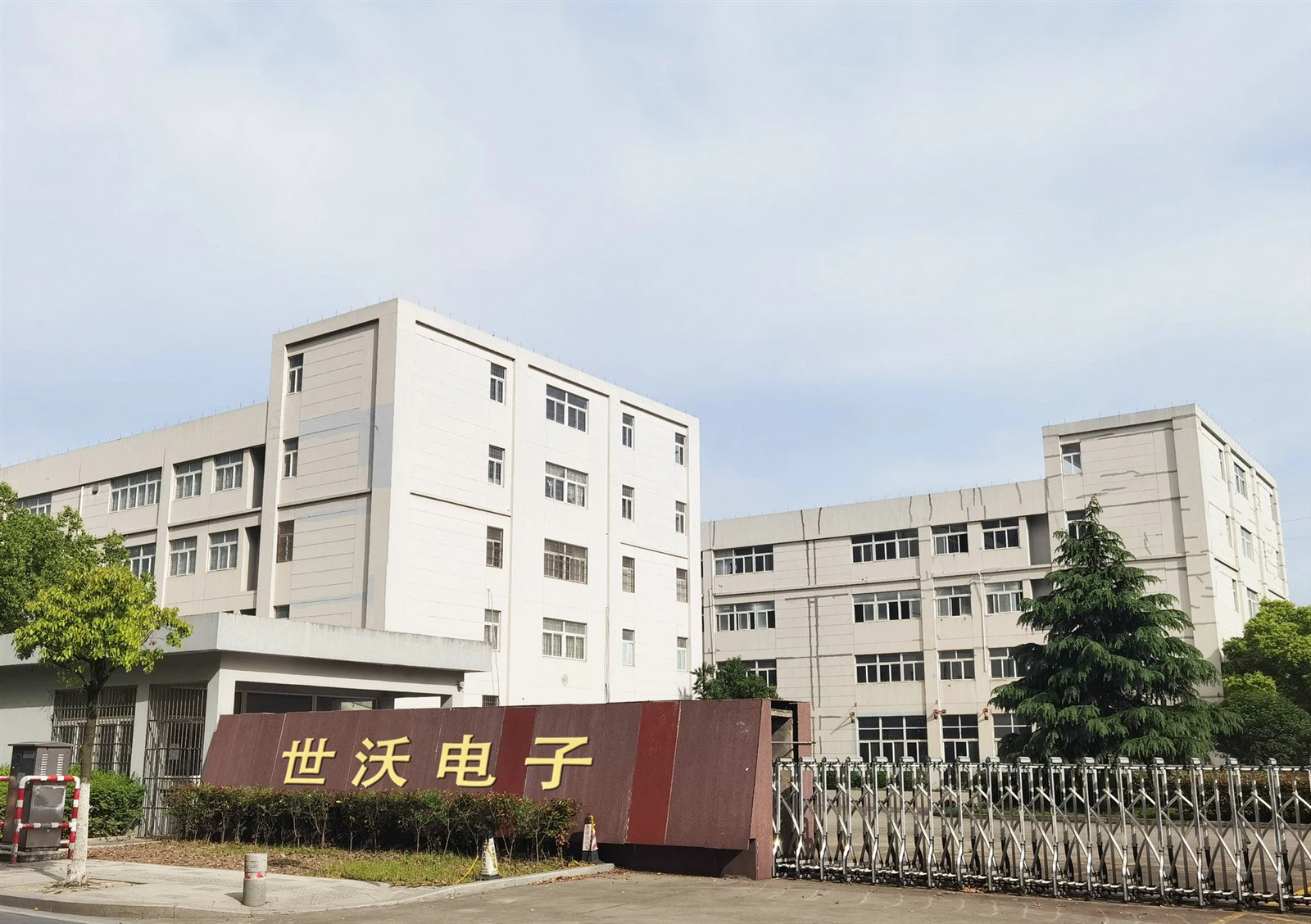
Swallow Electronics Factory, established in 2006, specializes in manufacturing and exporting high-quality audio products, including ceiling, wall, ball, garden, horn, and column speakers, as well as megaphones. With a 3,800 sqm workshop, 12 injection molding machines, and a monthly output of 50,000pcs, we ensure efficient production. Our experienced team, with 15+ years of expertise, guarantees excellence in OEM & ODM services, including custom designs, logos, and labels. Supplying to Europe, the USA, the Middle East, and South America, our CE & RoHS-compliant products meet global standards. Committed to quality, service, timely delivery, and competitive pricing, we aim to build lasting partnerships based on trust and satisfaction.
FAQS
1. Are garden speakers waterproof?
Yes, most garden speakers are IP-rated for waterproof and weather resistance, making them suitable for rain, humidity, and outdoor conditions.
1. Do horn speakers require an amplifier?
Passive horn speakers need an external amplifier.
Active horn speakers have a built-in amplifier and can connect directly to audio sources.
100V/70V horn speakers are used for long-distance PA systems.
2. Are horn speakers weatherproof?
Yes, many horn speakers are IP-rated for outdoor and industrial use, making them waterproof, dustproof, and corrosion-resistant.
3. Can horn speakers be used for music?
Horn speakers are designed primarily for speech and announcements but can also be used for music in outdoor or large-area applications.
4. How far can a horn speaker project sound?
The range depends on wattage and horn design, but most horn speakers can cover hundreds of meters. High-power compression horn speakers can reach even longer distances.
5. How do I install a horn speaker?
Wall-mounted or pole-mounted using brackets.
Connected to a PA amplifier via standard speaker wiring.
Multiple units can be linked in a 100V/70V system for large coverage.
6.What type of speaker is a horn?
A horn loudspeaker is a loudspeaker or loudspeaker element which uses an acoustic horn to increase the overall efficiency of the driving element(s).
7.How to choose a speaker for your horn?
Select a horn speaker that gives a significantly higher sound output to overcome the background noise and sound pressure levels within the area. The clarity and dispersion of sound are paramount if the horn speakers are used to provide critical voice evacuation.
8.Are horn speakers the best?
Horn speakers are revered by audiophiles for their ability to deliver dynamic sound with unparalleled efficiency and clarity. First developed in the early 20th century, horn-loaded speakers have evolved into high-end audio devices used in home hi-fi systems, professional sound reinforcement, and theater installations.
9.What is another name for a horn speaker?
A megaphone, speaking trumpet, bullhorn, blowhorn, or loudhailer is usually a portable or hand-held, cone-shaped acoustic horn used to amplify a person's voice or other sounds and direct it in a given direction.
10.Which is better, a dome or horn tweeter?
Dome tweeters offer wide dispersion and versatility, making them suitable for a range of applications. On the other hand, horn-loaded tweeters excel in high efficiency and extended high-frequency response, which can be advantageous in scenarios where directional sound control and detail are paramount.
11.What is the principle of horn speaker?
Whether it's a loudspeaker or an instrument, the horn always functions as a sound amplifier. The reason for this is the funnel-like shape of a horn that grows larger towards the opening. The efficiency of such a transducer must be extremely high.
12.Why use horn speakers?
The main advantage of horn loudspeakers is they are more efficient; they can typically produce approximately 10 times (10 dB) more sound power than a cone speaker from a given amplifier output.
13.How to choose a speaker for your horn?
- Sound output must be higher than the environment's ambient noise level
- Hardy design to overcome different environmental conditions
14.Is a horn a tweeter?
A tweeter or treble speaker is a special type of loudspeaker (usually dome, inverse dome or horn-type) that is designed to produce high audio frequencies, typically from 2,000 to 20,000 Hz.
15.What is the frequency of a horn?
Low Frequency Range: 100-250 Hz. Mid Frequency Range: 250-400 Hz. High Frequency Range: 400-5,000 Hz.
We're well-known as one of the leading horn speakers manufacturers and suppliers in China. Please feel free to buy customized horn speakers made in China here from our factory. For quotation, contact us now.
horn speaker shipping time, horn speaker cost, horn speaker marketPopular Products


