


Connecting a subwoofer to column speakers can significantly enhance your audio system's performance, delivering a more immersive and well - rounded sound experience. As a supplier of high - quality column speakers, I am excited to share with you a comprehensive guide on how to achieve this connection effectively.

Understanding the Basics
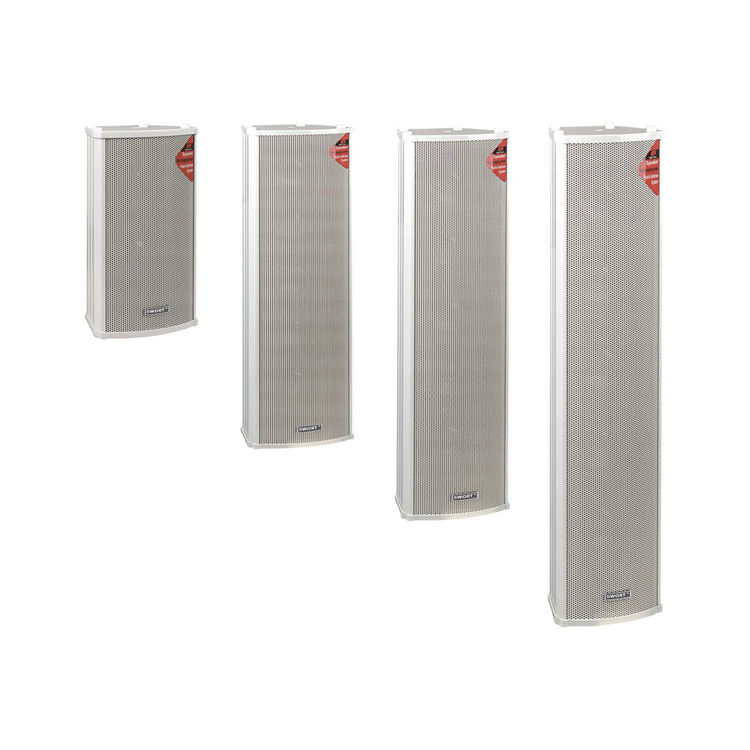
Before we dive into the connection process, it's essential to understand the roles of column speakers and subwoofers. Column speakers are known for their ability to provide clear, focused sound over a wide area. They are often used in various settings, such as Column Speakers Church, where even sound distribution is crucial. These speakers typically handle mid - range and high - frequency sounds very well.
On the other hand, subwoofers are specialized speakers designed to reproduce low - frequency sounds, commonly referred to as bass. Bass frequencies are responsible for adding depth, impact, and richness to the overall audio. By combining column speakers with a subwoofer, you can create a more balanced and full - spectrum sound.
Types of Column Speakers and Compatibility
There are different types of column speakers available in the market, such as 70V 100V Column Loudspeaker and Indoor Column Speaker. When connecting a subwoofer, compatibility is key.
Most modern subwoofers are designed to be compatible with a wide range of audio systems. However, you need to ensure that the power output of your subwoofer is appropriate for your column speakers. If the subwoofer is too powerful, it may overpower the column speakers and cause an unbalanced sound. Conversely, if it's underpowered, you may not get the desired bass effect.
Step - by - Step Connection Process
Step 1: Choose the Right Location
The first step is to find the optimal location for both your column speakers and subwoofer. Column speakers are usually mounted on walls or stands at ear - level to ensure the best sound dispersion. For the subwoofer, it's best to place it on the floor, near a corner of the room. Corners can help enhance the bass response due to the natural acoustic properties of the room.
Step 2: Gather the Necessary Cables
You will need appropriate cables to connect the subwoofer to your audio system. The most common types of cables used are RCA cables or speaker wires. If your subwoofer has a built - in amplifier, you can use RCA cables to connect it to the audio source or the amplifier that is powering your column speakers.
Step 3: Connect the Subwoofer to the Audio Source
If your audio system has a dedicated subwoofer output, you can directly connect the subwoofer to this output using an RCA cable. Simply plug one end of the RCA cable into the subwoofer input and the other end into the subwoofer output of your audio source, such as a receiver or an amplifier.
If your audio source does not have a dedicated subwoofer output, you can use a Y - adapter. Connect the Y - adapter to the main audio output of your source, and then connect one end of the adapter to the column speakers and the other end to the subwoofer.
Step 4: Connect the Column Speakers
Connect your column speakers to the amplifier or receiver according to the manufacturer's instructions. Make sure to match the positive and negative terminals correctly to avoid any phase issues.
Step 5: Configure the Settings
Once the physical connections are made, you need to configure the settings on your audio system. Most modern audio receivers and amplifiers have a subwoofer setting that allows you to adjust the volume, crossover frequency, and phase of the subwoofer.
The crossover frequency determines the point at which the audio signal is split between the column speakers and the subwoofer. A typical crossover frequency for a subwoofer connected to column speakers is around 80 - 120 Hz. You can adjust this frequency based on your personal preference and the capabilities of your speakers.
The phase setting ensures that the bass from the subwoofer is in sync with the sound from the column speakers. You may need to experiment with different phase settings to find the one that provides the best sound quality.
Troubleshooting
Even after following the above steps, you may encounter some issues. Here are some common problems and their solutions:
Problem 1: No Sound from the Subwoofer
- Check the power supply of the subwoofer to ensure it is turned on and properly plugged in.
- Verify the cable connections. Make sure the RCA cables or speaker wires are securely connected to the appropriate ports.
- Check the volume settings on the subwoofer and the audio system. Sometimes, the subwoofer volume may be set too low.
Problem 2: Unbalanced Sound
- If the bass is too overpowering or too weak, adjust the crossover frequency and the volume settings of the subwoofer.
- Check the placement of the subwoofer. Moving it to a different location in the room may improve the sound balance.
Problem 3: Distorted Sound
- Distorted sound can be caused by a damaged cable or a problem with the amplifier. Check the cables for any signs of damage and try replacing them if necessary.
- If the problem persists, it may be an issue with the amplifier. Contact the manufacturer's support for further assistance.
Benefits of Connecting a Subwoofer to Column Speakers
- Enhanced Sound Quality: The combination of column speakers and a subwoofer provides a more balanced and full - range sound. The column speakers handle the mid - and high - frequencies clearly, while the subwoofer adds depth and impact with its low - frequency reproduction.
- Immersive Listening Experience: Whether you are listening to music, watching a movie, or attending a live event, the addition of a subwoofer can make the audio more engaging and immersive.
- Versatility: This setup can be used in various settings, from small home theaters to large church auditoriums.
Conclusion
Connecting a subwoofer to column speakers is a relatively straightforward process that can significantly enhance your audio experience. By following the steps outlined in this guide, you can create a well - balanced and powerful audio system.
If you are interested in purchasing high - quality column speakers for your audio setup, we are here to assist you. Our range of Column Speakers Church, 70V 100V Column Loudspeaker, and Indoor Column Speaker are designed to meet the highest standards of quality and performance. Feel free to contact us for more information and to discuss your specific requirements. We look forward to helping you create the perfect audio solution.
References
- Bose Professional Audio Guide.
- Yamaha Audio System Manuals.
- Sennheiser Audio Technology Handbook.


