


When it comes to audio equipment, horn speakers stand out for their unique acoustic characteristics. As a supplier of horn speakers, I've had the privilege of delving deep into the science behind these remarkable devices. In this blog post, I'll explore the acoustic properties of horn speakers, shedding light on what makes them so special and why they are a popular choice for various applications.
1. Horn Design and Sound Propagation
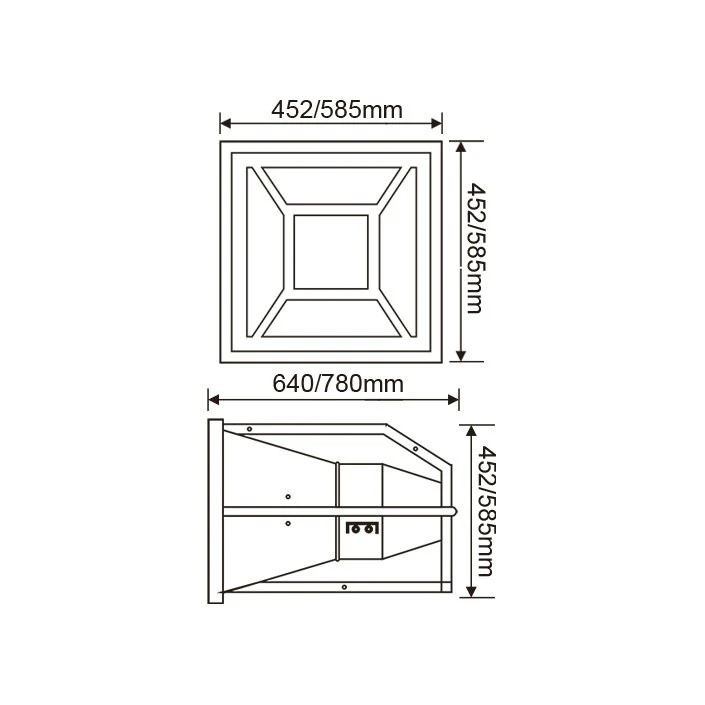
The most distinctive feature of a horn speaker is its horn-shaped enclosure. This design is not just for aesthetics; it plays a crucial role in the way sound is produced and transmitted. The horn acts as a transformer between the small diaphragm of the driver and the surrounding air. When the diaphragm vibrates, it creates sound waves. The horn gradually expands, allowing these sound waves to spread out more efficiently into the air.
The expansion of the horn follows a specific mathematical curve, such as an exponential or a conical curve. This curve determines how the sound waves are transformed as they travel through the horn. An exponential horn, for example, provides a smooth transition for the sound waves, reducing reflections and ensuring a more uniform distribution of sound. This results in a more efficient transfer of energy from the driver to the air, which means that horn speakers can produce louder sounds with less power compared to other types of speakers.
2. Frequency Response
One of the key acoustic properties of horn speakers is their frequency response. Horn speakers are known for their ability to reproduce high frequencies very well. The shape of the horn helps to direct the high-frequency sound waves in a more focused manner, which allows them to travel further and maintain their clarity. This makes horn speakers ideal for applications where clear, high-pitched sounds are required, such as public address systems, outdoor events, and alarm systems.
However, horn speakers typically have a more limited low-frequency response. The design of the horn makes it difficult to reproduce very low frequencies efficiently. To overcome this limitation, many horn speaker systems are combined with a separate woofer or subwoofer to handle the low frequencies. This combination allows for a more balanced frequency response across the entire audio spectrum.
3. Directivity
Directivity refers to the way a speaker radiates sound in different directions. Horn speakers are highly directional, which means that they focus the sound in a specific direction. This is because the horn acts as a waveguide, channeling the sound waves in a particular path. The directivity of a horn speaker depends on its design, including the shape and size of the horn.
A narrow horn will have a more focused beam of sound, which is useful for applications where the sound needs to be directed over a long distance or to a specific area. For example, in a large outdoor stadium, a narrow horn speaker can be used to project the sound to the far reaches of the venue. On the other hand, a wider horn will have a more spread-out beam of sound, which is suitable for applications where a broader coverage area is required, such as in a small auditorium or a conference room.
4. Efficiency
Efficiency is another important acoustic property of horn speakers. As mentioned earlier, horn speakers are more efficient at converting electrical energy into sound energy compared to other types of speakers. This is due to the way the horn design helps to match the impedance of the driver to the impedance of the air. By providing a better impedance match, more of the electrical energy is transferred to the air as sound, resulting in a louder sound output for a given amount of power.

The high efficiency of horn speakers makes them a cost-effective choice for applications where high sound levels are required. They can operate with less power, which means lower energy consumption and reduced operating costs. Additionally, the high efficiency also allows for smaller amplifiers to be used, which can save on equipment costs and space.
5. Applications of Horn Speakers
The unique acoustic properties of horn speakers make them suitable for a wide range of applications. Here are some of the common uses of horn speakers:
- Public Address Systems: Horn speakers are widely used in public address systems, such as in schools, airports, and shopping malls. Their high efficiency and directivity make them ideal for broadcasting announcements and messages over a large area. You can explore our Outdoor Pa Horn Speaker for outdoor public address needs.
- Outdoor Events: For outdoor concerts, festivals, and sporting events, horn speakers are a popular choice. They can project the sound over long distances and maintain clarity even in noisy environments. Our Long Distance Horn Loudspeaker is designed specifically for such long-range applications.
- Alarm Systems: Horn speakers are often used in alarm systems to produce loud, attention-grabbing sounds. Their ability to reproduce high frequencies makes them effective at cutting through background noise and alerting people to potential dangers.
- Industrial Settings: In industrial environments, where noise levels are high, horn speakers can be used to communicate important information. They can be heard over the machinery noise and ensure that workers receive critical messages.
- Marine Applications: Horn speakers are also used in marine applications, such as on boats and ships. Their weatherproof design, like our White Weatherproof PA Horn, makes them suitable for use in harsh outdoor conditions.
Conclusion
In conclusion, the acoustic properties of horn speakers, including their horn design, frequency response, directivity, and efficiency, make them a unique and valuable audio solution. Whether you need to project sound over long distances, reproduce high frequencies clearly, or save on power consumption, horn speakers offer a range of benefits.
If you're interested in learning more about our horn speakers or have specific requirements for your audio project, we'd love to hear from you. Contact us to discuss your needs and explore how our horn speakers can meet your expectations.
References
- Beranek, Leo L. "Acoustics." American Institute of Physics, 1986.
- Olson, Harry F. "Elements of Acoustical Engineering." Van Nostrand Reinhold Company, 1957.


